Do you picture high ceilings and herringbone floors, or do you want a pool, spa, and a playroom downstairs? On the Upper West Side, most buyers weigh classic prewar co-ops against newer, amenity-rich condos. Each path affects your financing, monthly costs, use rules, and resale options. In this guide, you’ll learn the key differences, see real UWS examples, and get a simple checklist to help you decide. Let’s dive in.
What you own, how you close
Co-ops are shares in a corporation with a proprietary lease, while condos are deeded real property with an interest in common areas. This basic distinction shapes everything from board approvals to closing costs and financing. For a deeper overview of ownership and buyer impact, review StreetEasy’s co-op vs. condo guide.
Monthly costs and taxes
Co-op maintenance usually includes building operations, staff, insurance, and the building’s property taxes. In some co-ops it can also include interest on an underlying building mortgage. That is why co-op maintenance often looks higher at first glance. StreetEasy’s explainer breaks down these mechanics.
Condo owners pay common charges for building operations and reserves, then receive a separate property tax bill. To compare apples to apples, add a condo’s common charges to the monthly equivalent of its annual property taxes. Also review transfer fees. Many co-ops levy a “flip tax” at resale, which can be a percentage of price, a per-share fee, or a share of profit. Learn how flip taxes work in this summary of transfer fees.
Layouts and amenities on the UWS
Prewar co-op character
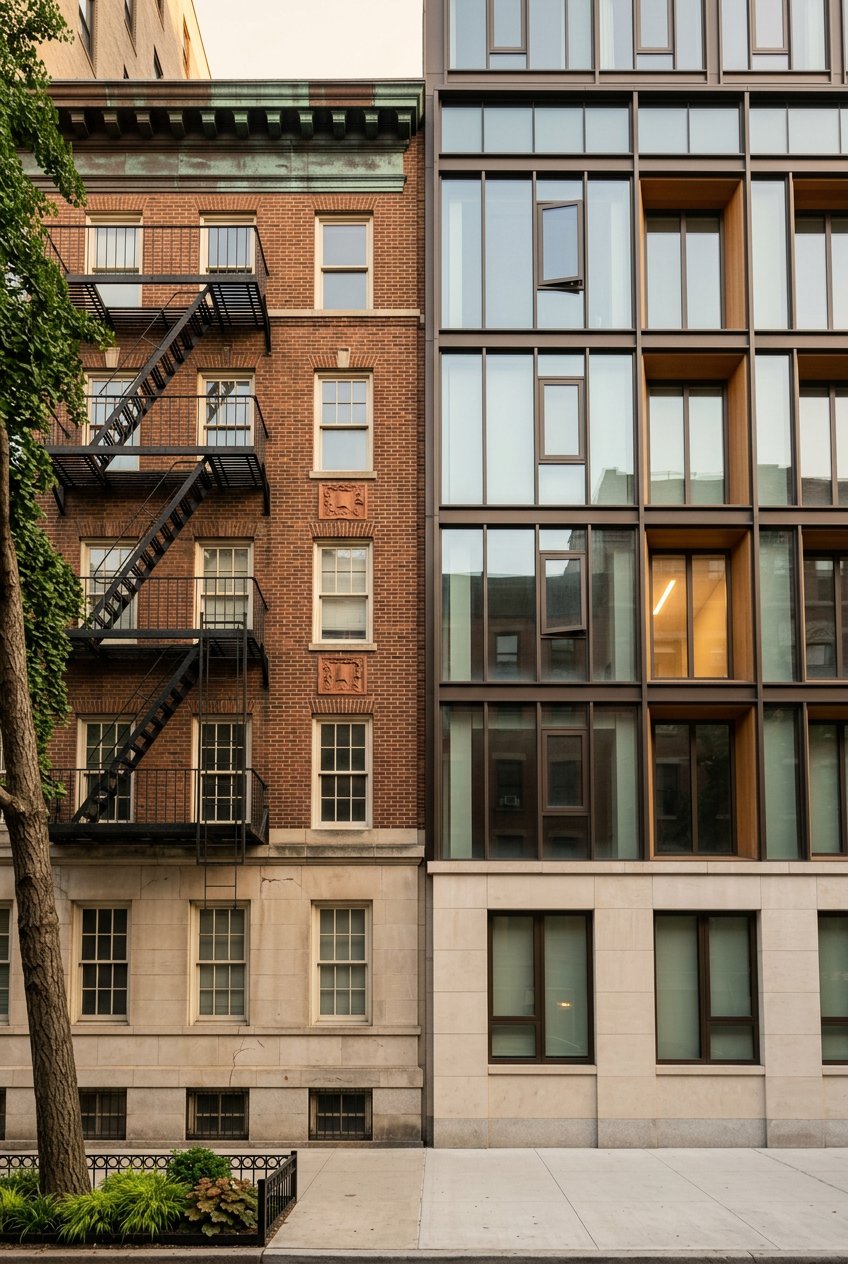
Prewar co-ops often feature formal entries, separate dining rooms, tall ceilings, detailed millwork, and original hardwood. Kitchens were typically separate and smaller, though many have been opened in renovations. These hallmarks are common on Central Park West, Riverside Drive, and blocks through the 70s to 90s. For a primer on prewar style and layouts, see this overview of prewar apartments.
Newer condo design
New condos lean into open kitchens, larger windows, central HVAC, and service-focused amenity floors. That design adds convenience and community rooms, which can raise common charges but also deliver a concierge lifestyle. On the Upper West Side, two examples illustrate the tradeoffs well.
The Henry, 211 W 84th Street (new condo)
The Henry is a Robert A.M. Stern–designed condominium marketed with club spaces that include pickleball, a bowling lane, a cinema, and garden rooms. Sponsor and press materials highlight a high-amenity, white-glove approach that commands premium pricing yet maximizes flexibility for owners. Explore the amenity concept in The Henry’s press page. Example MLS records show completed condo sales in 2025 and 2026, including a January 2026 closing at 211 W 84th.
200 Amsterdam (Lincoln Square condo)
200 Amsterdam packages resort-style amenities, including a spa and a 75-foot heated saltwater pool, reflecting how newer UWS condos compete on services and lifestyle. Listings and sponsor materials show high-end finishes and club programming. Review the amenity suite in this 200 Amsterdam listing collection.
Prewar icons set the tone
Co-ops like the San Remo, the Beresford, and the Dakota define the area’s prewar identity with formal layouts and strong co-op governance. Their histories help explain how board culture shaped building character and lifestyle expectations. Read more about the San Remo’s co-op legacy in this building history.
Financing and timelines
Co-ops typically require strong financials. Down payments often range from about 20 percent to 30 to 50 percent in stricter buildings, and some elite co-ops effectively expect all-cash. Many boards also look for post-closing liquidity of roughly 12 to 24 months of mortgage and maintenance in reserves. Even if a bank approves your loan, a co-op board can still deny you. See the lending and approval differences in StreetEasy’s buyer guide.
Condos follow deed-based mortgages with more standardized underwriting. Some programs allow 10 to 20 percent down, subject to lender limits. Timelines are usually faster for condos because there is no board interview.
Closing costs
Condo buyers should budget for title insurance and, if financing, mortgage recording tax, which make condo closings costlier on average. Co-op buyers generally avoid title insurance on the unit and mortgage recording tax, so upfront closing costs are usually lower, though application fees and legal review still apply. Details appear in StreetEasy’s co-op vs. condo breakdown.
Board rules and subletting
Co-op boards have broad discretion. You submit a full board package and often sit for an interview. Boards can set sublet policies, restrict pied-à-terre use, and limit gifts or guarantors. This oversight can narrow the buyer pool when you resell. Condos use a more administrative review process and rarely reject buyers, which is why they tend to be more investor-friendly. For practical implications, see StreetEasy’s guide to rules and approvals.
Resale and liquidity
Condos attract a wider buyer pool, including investors and non-residents, which often supports higher price per square foot and can speed resale in some segments. Co-ops tend to trade to end users and can move more slowly depending on board policies and building rules. These dynamics are part of why newer UWS condos often carry a premium, while co-ops can offer more space for the money.
Quick comparison checklist
- Ownership
- Co-op: Shares plus proprietary lease; board approval required.
- Condo: Deeded unit plus common interest; administrative review.
- Typical down payment
- Co-op: Commonly 20 to 30 percent, sometimes 50 percent or more; strong post-closing liquidity.
- Condo: Often 10 to 20 percent with lender approval; more options for non-US buyers.
- Monthly costs
- Co-op: One maintenance payment that includes building property taxes and operations; may include underlying mortgage interest.
- Condo: Common charges plus a separate property tax bill you pay directly.
- Subletting and use
- Co-op: Stricter sublet rules, board discretion on pied-à-terres, gifting, and guarantors.
- Condo: Generally more flexible for leasing and non-resident use.
- Amenities and layouts
- Co-op: Formal rooms, prewar details, often smaller amenity footprint.
- Condo: Open layouts, central HVAC, robust amenity floors and services.
- Closing costs and timeline
- Co-op: Lower closing costs on average; longer timeline due to board review.
- Condo: Higher closing costs with title insurance and recording tax; faster closings.
How to choose on the Upper West Side
Start with lifestyle. If you value formal rooms, character, and plan to live there long term, a prewar co-op can deliver more space per dollar if you meet the board’s financial standards. If you prefer flexibility to finance, faster closings, robust amenities, or the option to rent periodically, a newer condo often fits better even with a higher sticker price once you add common charges and taxes.
Next, model the numbers side by side. Compare monthly maintenance versus condo common charges plus taxes. Include likely flip taxes for a future sale. Then pressure-test your financing against a co-op’s down payment and liquidity rules.
Finally, walk the buildings. Visit a prewar co-op for scale and light, then tour a new condo like The Henry or 200 Amsterdam for service and amenity flow. The contrast in lobby experience, elevator speed, storage, and mechanical noise will help you decide.
When you are ready for a private, data-led plan, The W Team will benchmark options, coordinate curated showings with a private driver, and align your purchase with your financing and timeline. Multilingual service is available. Request a private consultation.
FAQs
What is the main difference between a co-op and a condo in NYC?
- Co-ops are shares with a proprietary lease and board approval; condos are deeded property with administrative review and more flexible ownership.
How do co-op maintenance fees compare to condo costs?
- Co-op maintenance usually includes building property taxes and operations, while condo owners pay common charges plus a separate tax bill.
Can I rent out my Upper West Side co-op or condo?
- Condos are generally more flexible on leasing; co-ops often have stricter sublet rules set by the board that can limit timing and terms.
What down payment do I need for a UWS co-op vs. condo?
- Many co-ops require about 20 to 30 percent down, sometimes 50 percent or more, plus strong post-closing liquidity. Some condos allow 10 to 20 percent down, subject to lender rules.
Which tends to resell faster on the Upper West Side?
- Condos often draw a broader buyer pool, including investors and non-residents, which can support faster resales in some segments compared with co-ops.