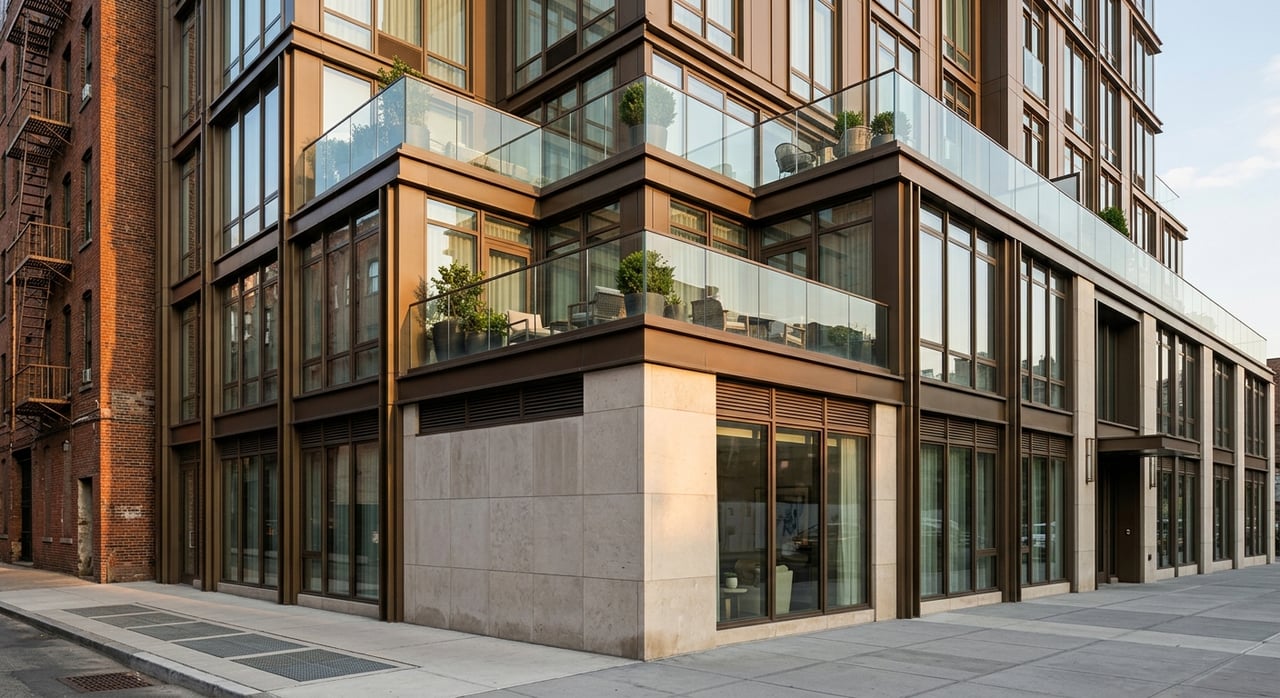
What makes one West Chelsea condo trade at a clear premium over another just a few blocks away? In this stretch along the High Line, pricing is rarely random. If you are buying, selling, or simply trying to understand value in this part of Manhattan, it helps to know which details the market consistently rewards. Let’s dive in.
Why West Chelsea Acts Like Its Own Market
West Chelsea often gets grouped into broader Chelsea, but the condo market along the High Line behaves more like a distinct luxury submarket. A big reason is the Special West Chelsea District, approved by the City Council in 2005 to support the High Line plan. That zoning framework still shapes development through rules around height, setbacks, transparency, open areas, access easements, and transfers.
Those rules matter because they influence what buyers actually pay for. In a neighborhood where massing, frontage, and openness are shaped by policy, exact block position and building orientation can have an outsized effect on light, privacy, and views. In practical terms, two residences with similar square footage may not compete on equal footing.
The High Line itself also adds more than green space. It is a 1.45-mile elevated public park stretching from Gansevoort Street to West 34th Street, opened in phases between 2009 and 2014. Friends of the High Line reports more than 450 public programs each year, and High Line Art has featured more than 120 artists, which reinforces the corridor’s role as both a park and a cultural destination.
High Line Proximity Still Commands a Premium
The most obvious value driver is adjacency to the High Line. An academic study estimated that the park’s introduction increased nearby housing values by 35%. That helps explain why High Line-facing condos and residences very close to the park often trade at stronger price levels.
That said, not all proximity is equal. The market tends to separate direct views from partial views, and both from simple walkability. If you are comparing listings, a unit with a clear visual relationship to the park may deserve a different pricing lens than one in the same zip code without that connection.
For sellers, this is where pricing discipline matters. Saying a condo is “near the High Line” is not enough if competing inventory has better orientation, stronger openness, or more direct sightlines. Buyers in this corridor usually notice the difference quickly.
Views, Light, and Orientation Matter More Here
Because of the district’s development rules, view corridors and facade orientation carry unusual weight in West Chelsea. The zoning structure around the High Line has made the neighborhood especially sensitive to how a building meets the street, the park, and surrounding open space. That is one reason price per square foot can vary so sharply from one stack to another.
Within the same address, exposure and height can create major pricing gaps. One High Line offers a useful example. Recent sales there ranged from about $2.08 million for a one-bedroom to $45.03 million for a five-bedroom penthouse-level residence.
That spread shows how much value can shift based on layout, floor height, terrace space, and outlook. When you assess a condo here, you need to look beyond headline square footage. The stack, floor, and orientation are often part of the real story.
Architecture Can Be a Pricing Driver
In West Chelsea, architecture is not just branding. It can be part of the asset itself. Buildings with strong design pedigree often stand apart in buyer perception, especially in a neighborhood already known for art, design, and high-visibility development.
A clear example is 520 West 28th, Zaha Hadid’s only residential project in New York. The 39-residence building is known for its sculptural form and hand-crafted steel facade, along with features such as private elevator lobbies, a spa, a skylit lap pool, a sculpture garden, and an entertainment suite with an IMAX theater.
Another landmark example is 100 11th Avenue by Jean Nouvel. The 56-unit building was designed around reflections of the Hudson River and natural light, with amenities that include an art gallery and gym. In both cases, the architecture itself helps shape long-term market positioning.
For buyers, that means branded design can support resale appeal, especially when the building remains visually distinctive years after delivery. For sellers, it means your marketing should frame design features as part of value, not just as style.
Amenities Influence Price More Than You Might Think
In many luxury markets, amenities are expected. In West Chelsea, they can materially influence pricing. That is especially true in newer buildings where service, wellness offerings, and hospitality programming are central to the ownership experience.
One High Line is a strong example of amenity-led pricing. The project includes 236 condominiums across two towers and markets features such as valet, hospitality services, a 75-foot lap pool, spa programming, and private club-style spaces. Those elements support its position at the top end of the local market.
At 520 West 28th, the amenity story is also part of the value equation. Wellness spaces, storage, valet parking, and a highly recognizable design identity all contribute to how buyers assess the building relative to other options nearby. In this corridor, amenities are often part of the pricing logic, not just a bonus.
The Arts Identity Still Adds Value
West Chelsea’s gallery presence is not just neighborhood lore. The rezoning environmental review described the area as a major gallery cluster, with about 235 galleries in the action area and the densest concentration on West 24th through West 26th Streets. That cultural identity remains active today.
Current anchors help support that narrative. Hauser & Wirth’s location on West 22nd Street and Atlantic Gallery’s location a half-block from the High Line both reinforce the area’s ongoing connection to the arts. For many buyers, this adds a layer of place value that goes beyond architecture alone.
This does not mean every condo receives the same boost from arts adjacency. But it does help explain why West Chelsea continues to attract buyers who prioritize culture, design, and a distinct neighborhood identity. That demand can support pricing resilience over time.
Why Price Per Square Foot Varies So Much
One of the biggest mistakes in West Chelsea is treating the market as if it has one simple price point. Current StreetEasy snapshots show West Chelsea at a median asking level of $3.075 million and about $2,305 per square foot. New development inventory is much higher, with a median of $6.9 million and roughly $3,029 per square foot.
That compares with lower overall figures in nearby areas. Hudson Yards showed about $2.30 million and $2,195 per square foot overall, while broader Chelsea was much lower at a $1.3 million median sale price. The takeaway is clear: West Chelsea operates as a premium niche inside a larger corridor.
Public sales data from the NYC Department of Finance shows just how wide the local range can be. In the 2025 annualized sales file, units at 517 West 29th Street sold from under $1 million to about $2.1 million, 527 West 27th Street #9A sold for $9.15 million, and 520 West 28th Street PH37 sold for $26.5 million, or about $4,004 per square foot.
That level of dispersion tells you something important. In West Chelsea, pricing is highly building-specific and unit-specific. You need a sharper lens than neighborhood averages.
What Buyers Should Watch Closely
If you are buying in West Chelsea, it helps to focus on the variables that actually move value. A beautiful lobby or strong address may get your attention, but resale performance often comes down to a smaller set of fundamentals.
Key Buyer Value Checks
- Exact relationship to the High Line
- Protected or open views
- Floor height and stack position
- Terrace or loggia space
- Building architecture and long-term design appeal
- Amenity depth and service model
- Recent in-building and nearby comparable sales
It is also wise to compare within the same building, not just across the neighborhood. One stack can command a meaningful premium over another. In this part of Manhattan, micro-differences often become pricing differences.
What Sellers Need to Get Right
If you are selling, your strategy should go beyond broad Chelsea comps. West Chelsea buyers are often comparing design pedigree, service levels, view orientation, and exact building identity. Your pricing and positioning need to reflect that.
A disciplined launch usually starts with the right comp set. That means looking at your direct building peers, nearby High Line-adjacent inventory, and recent sales that match your unit’s floor, exposure, and outdoor space profile. Overpricing against generic neighborhood averages can weaken momentum quickly.
Presentation matters too. In a design-forward submarket, polished marketing, accurate valuation, and a clear narrative around your unit’s specific advantages can shape outcome. The strongest sellers frame why their residence deserves its place in the market rather than assuming the address does all the work.
The Bottom Line on West Chelsea Value
West Chelsea condos along the High Line derive value from an unusual overlap of factors: a policy-shaped development district, direct park adjacency, view and light dynamics, active arts identity, design-led buildings, and high-touch amenities. That is why this corridor often trades differently from broader Chelsea and even from nearby new-development pockets.
If you are evaluating a purchase or preparing a sale, the most useful question is not “What is the average price here?” It is “What exactly makes this unit more valuable than the next option?” In West Chelsea, the answer is usually specific, measurable, and worth getting right.
If you want a discreet, data-driven read on a West Chelsea condo, The W Team can help you evaluate pricing, positioning, and next steps with a boutique advisory approach.
FAQs
What makes West Chelsea condos along the High Line more expensive?
- West Chelsea condos often command higher prices because of High Line adjacency, protected or open views, design pedigree, strong amenities, and the neighborhood’s active arts identity.
How much do West Chelsea condo prices vary by building?
- Prices can vary widely by building and by unit. Public sales data and recent closings show a range from under $1 million in some buildings to more than $26 million and even $45 million for trophy residences.
Do High Line views really affect West Chelsea condo value?
- Yes. Research cited in the market shows that the High Line’s introduction raised nearby housing values, and direct views or close adjacency often support a premium over similar condos without that relationship.
Why is price per square foot inconsistent in West Chelsea?
- Price per square foot can shift based on floor height, orientation, terrace space, light, views, amenity package, and building brand, so neighborhood averages rarely tell the full story.
What should buyers compare when shopping for a West Chelsea condo?
- Buyers should compare exact block position, stack, exposure, floor, outdoor space, amenity depth, architectural identity, and recent comparable sales within the same building and nearby competing properties.