If you love downtown Manhattan but want a calmer day-to-day feel, Hudson Square deserves a closer look. You may know SoHo for its energy, shopping, and constant foot traffic, but not every buyer wants that level of activity outside the front door. Hudson Square offers a different rhythm, with loft-era architecture, strong transit access, and a more understated street presence. Here is what makes the neighborhood feel like a quiet alternative to SoHo, and what that could mean for your next move.
Why Hudson Square Feels Different
Hudson Square sits in Lower Manhattan, generally bounded by Clarkson Street, Canal Street, West Street, and 6th Avenue. The Hudson Square BID places it at the meeting point of the West Village, SoHo, and TriBeCa, which is part of its appeal. You get a central location without the same retail-heavy atmosphere found on many nearby SoHo blocks.
A big reason for that difference is land use. Hudson Square was formerly the Printing District, and city planning materials describe a neighborhood shaped by manufacturing buildings, warehouses, commercial lofts, and office uses. That history still shows up in the streetscape and building stock today.
The quieter feel is not about being isolated. It is more about the balance of uses in the neighborhood. Planning documents describe sparse evening and weekend activity in parts of the district, along with moderate sidewalk foot traffic, which helps explain why side streets can feel calmer than SoHo’s busier retail corridors.
Hudson Square vs. SoHo
If you are deciding between Hudson Square and SoHo, the main difference is often lifestyle texture rather than location. Both put you close to some of downtown’s most established destinations. Hudson Square simply tends to feel more low-key on a block-by-block basis.
SoHo is known for destination shopping, steady visitor traffic, and a dense retail presence. Hudson Square has restaurants, grocery options, and daily conveniences, but the mix is more neighborhood-scaled. That can make everyday living feel a little more relaxed, especially if you value quieter side streets and less constant foot traffic.
That said, Hudson Square is still very much part of busy Lower Manhattan. Major corridors like West Houston, Canal, Varick, Hudson, and West Street carry significant traffic, and the area sits near the Holland Tunnel. If you are considering a purchase here, the exact building and street exposure matter.
What Homes Look Like Here
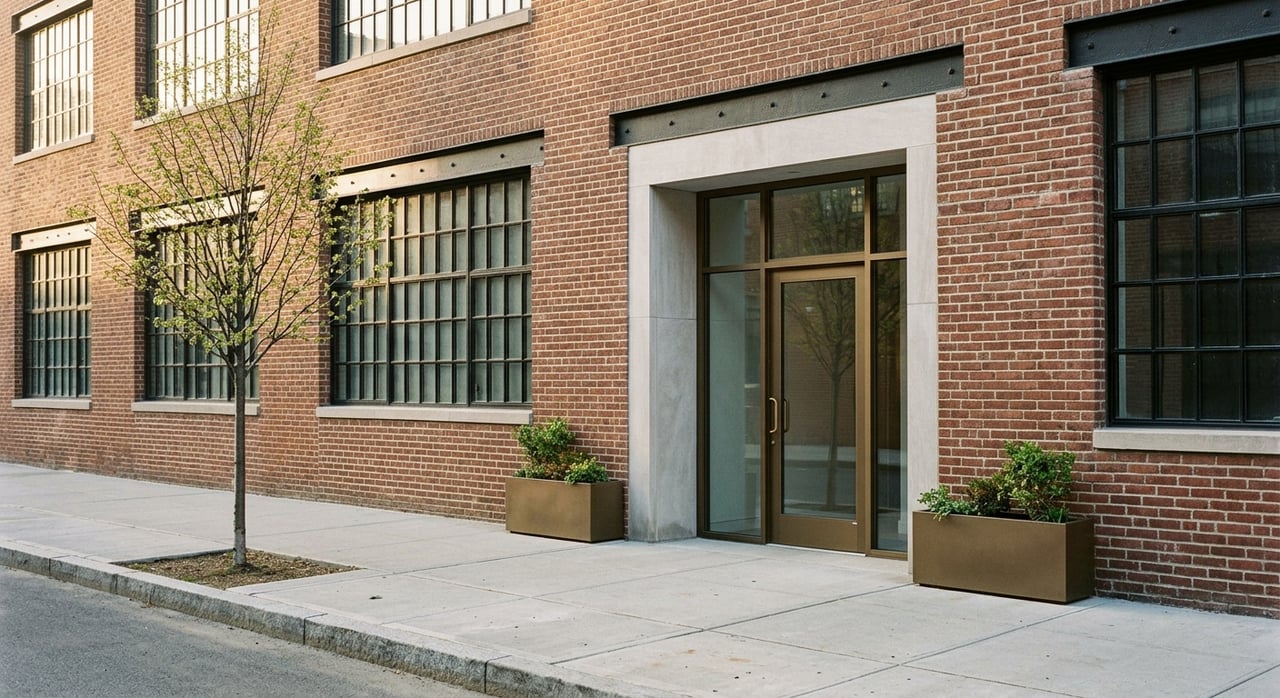
Hudson Square does not read like a classic uptown apartment market, and that is part of its appeal. City planning materials point to a building stock shaped by former industrial and warehouse properties, many of which later transitioned to office use. As residential development has expanded, the neighborhood has kept much of that loft-and-conversion identity.
For many buyers, that means you will see more converted loft-style buildings, office conversions, and mixed-use properties rather than a large supply of traditional prewar apartment stock. If you are drawn to volume, larger windows, and a more modernized industrial feel, Hudson Square can offer a compelling alternative to surrounding neighborhoods.
The neighborhood is also still evolving. Rezoning in the Special Hudson Square District was designed to support a mixed residential, commercial, and industrial area, while encouraging affordable housing and preserving commercial and light-manufacturing uses. In practical terms, that means the district is not static, and buyers should view it as a neighborhood with an active long-term growth story.
New Development and Neighborhood Momentum
One of the biggest current projects is Hudson Mosaic at 388 Hudson Street. In December 2025, HPD and partner agencies selected a development team for the city-owned site between West Houston and Clarkson Streets. The project is expected to bring nearly 280 affordable and supportive apartments, a new NYC Parks recreation center, and a separate public open space component on the southern portion of the lot.
For residents and buyers, projects like this matter because they signal a neighborhood becoming more fully lived-in over time. Hudson Square already functions as a mixed-use district, but public investment and new housing can strengthen its residential identity further. That supports the idea that the area feels more residential than it once did, with more change still ahead.
The public realm is improving too. In 2022, the city, NYCEDC, DOT, and the Hudson Square BID completed the Hudson Street streetscape redesign, adding wider sidewalks, plantings, and a parking-protected bike lane. The BID is also advancing plaza and open-space projects, including Little Sixth Avenue Plaza and the Hudson-Houston Plaza corridor.
Getting Around Hudson Square
For a neighborhood that can feel comparatively quiet on some blocks, Hudson Square is exceptionally well connected. The MTA lists the 1 train at Houston Street, plus C and E train access at Spring Street and Canal Street. Nearby Broadway-Lafayette and West 4th expand access to the F, M, B, D, A, C, and E lines.
If you travel between Manhattan and New Jersey, PATH is another advantage. Christopher Street station is close by, and PATH operates 24 hours a day, 7 days a week. PATH also notes connections there to the 1 line and to A, C, E, B, D, F, and M service at Sixth Avenue.
The neighborhood is also becoming easier to navigate on foot and by bike. The Hudson Street redesign added a protected bike lane, widened sidewalks, and new plantings, while the BID continues to prioritize pedestrian safety, bike parking, and plaza-style improvements. If your version of convenience includes walking to dinner, commuting by train, or biking downtown, Hudson Square checks important boxes.
Daily Life in the Neighborhood
Hudson Square offers practical convenience without feeling dominated by retail. HPD describes Hudson Street as a commercial corridor with clusters of restaurants, grocery stores, and other retail, which supports day-to-day needs. The BID’s neighborhood guides also point to a concentrated set of cafés, bars, and restaurants within a short walk.
This is an important distinction for buyers comparing Hudson Square with SoHo. You can still access dining and essentials easily, but the area tends to feel more functional and less driven by destination shopping. For many residents, that translates into a neighborhood that feels easier to live in full time.
Open space also adds to the quality of life. The Hudson Square BID highlights Spring Street Park, Freeman Plaza East and West, and the redesigned Hudson Street corridor as part of the neighborhood’s public realm. New plaza projects and wayfinding programs continue to make the district more walkable and visually cohesive.
A Creative, Design-Forward Identity
Hudson Square has a strong connection to New York’s creative economy. The BID says the neighborhood is home to about 60,000 people working in advertising, design, media, and communications. City planning materials also note that many former manufacturing and warehouse buildings have transitioned into office space for creative and professional-service users.
That identity shapes the feel of the neighborhood in subtle ways. You see it in the building stock, in the mix of office and residential uses, and in the overall tone of the streets. For buyers who want a downtown setting that feels polished but less performative, that creative-business presence can be part of the appeal.
There are cultural anchors here as well. Film Forum, HERE Arts Center, the Greene Space, and the area’s public-art program all reinforce Hudson Square’s arts-and-media character. If you want to live near culture without living in the middle of a destination retail zone, that balance is worth noting.
Who Hudson Square May Suit Best
Hudson Square can be a strong fit if you want downtown access with a more measured atmosphere. It may appeal to buyers who like SoHo and TriBeCa but prefer a neighborhood where side streets can feel calmer and the overall pace is a bit less constant. It can also work well if you value loft-style housing, strong transit, and an evolving public realm.
At the same time, this is not a sleepy enclave. Traffic remains part of the experience near major corridors, and the neighborhood’s mixed-use character means some blocks will feel more commercial than others. The best way to evaluate Hudson Square is at the building and street level, not just by ZIP code.
That is where a focused, data-driven search matters. In a micro-market like this, your experience can change significantly based on exposure, building type, and how close you are to major traffic routes or transit access points. If you are weighing Hudson Square against SoHo, TriBeCa, or the West Village, careful block-by-block analysis can make the decision much clearer.
If you are exploring downtown Manhattan and want a neighborhood that blends convenience, design-forward housing, and a calmer daily feel, Hudson Square is worth serious consideration. For tailored guidance on Manhattan micro-markets, private showings, and a more strategic neighborhood comparison, The W Team can help you evaluate the right fit with clarity and discretion.
FAQs
Is Hudson Square quieter than SoHo for full-time living?
- In many areas, yes. Planning materials support the idea that Hudson Square often has less retail-driven foot traffic and sparser evening and weekend activity than SoHo, though it is still a busy Lower Manhattan neighborhood.
What types of homes are common in Hudson Square?
- Hudson Square is known more for loft-style buildings, former warehouse and industrial properties, office conversions, and newer mixed-use development than for a large supply of classic prewar apartment stock.
Is Hudson Square convenient for commuting around New York City?
- Yes. The neighborhood is close to the 1, C, and E trains, with additional access nearby to the F, M, B, D, A, and other lines, plus 24/7 PATH service at Christopher Street.
Does Hudson Square have enough restaurants and daily conveniences?
- Yes. Hudson Street includes clusters of restaurants, grocery stores, and other retail, and the neighborhood offers day-to-day convenience without the same destination-shopping intensity as SoHo.
Is Hudson Square becoming more residential?
- Yes. Public planning and housing initiatives, including Hudson Mosaic at 388 Hudson Street and open-space improvements, point to a neighborhood that is continuing to add homes and residential amenities.