If you plan to sell on the Upper West Side, small details can have an outsized effect on price. In a market where buyers compare prewar co-ops, polished condos, and high-value townhouses block by block, presentation, condition, and documentation all matter. The good news is that you do not need to guess where to focus. With the right preparation, you can position your home to show well, launch at the right time, and support a premium result. Let’s dive in.
Why preparation matters on the Upper West Side
The Upper West Side is not a one-note market. Pricing can vary meaningfully based on property type, location, views, layout, and building quality, with stronger pricing often clustered near Central Park and Riverside Drive and among townhouses and large prewar apartments.
That makes pre-listing preparation especially important. Manhattan inventory was up 9.3% year over year in December 2025, and homes entering contract that month spent a median of 91 days on market. Redfin also reported a March 2026 Upper West Side median sale price of $1.535 million and 75 median days on market. In a more competitive environment, buyers have more options and more reasons to compare your home closely.
For premium sellers, the stakes are even higher. New York City Department of Finance 2025 sales data showed very high townhouse and one-family medians on the Upper West Side, including $7.915 million in UWS 59-79 and $11.3475 million in UWS 79-96. At that level, avoidable wear, visual clutter, or incomplete records can become expensive distractions.
Start with what buyers notice first
Upper West Side buyers often evaluate a home as a complete package, not just a list of finishes. According to the New York Attorney General, purchasers are advised to inspect items like facades, roofs, flooring, appliances, elevators, HVAC, windows, wiring, plumbing, leaks, and even whether doors and cabinets operate smoothly.
In practice, that means buyers are looking for visible care and signs of consistent maintenance. They are also comparing layout, flow, light, views, and noise levels across multiple buildings and blocks. On the Upper West Side, where prewar inventory remains a major part of the market, character is welcome, but deferred upkeep is not.
Before you spend money, walk through your home as if you were seeing it for the first time. Note anything that feels sticky, worn, dated, or unfinished. Premium buyers tend to notice the whole experience, from the entry sequence to how well each room connects to the next.
Fix these items first if you plan to sell in 6 to 18 months
If your timeline is six to eighteen months, begin with the work that improves presentation and reduces buyer hesitation. The best early spending is usually cosmetic, visible, and relatively low risk.
Focus first on:
- Deep cleaning throughout the home
- Refreshing paint where walls feel tired or uneven
- Repairing flooring issues or refinishing worn areas
- Updating dated outlets, switches, and light fixtures
- Making small tile or backsplash improvements where wear is obvious
- Decluttering closets, shelves, and storage areas
- Correcting sticking doors, drawers, and cabinets
- Addressing plumbing drips, leaks, or minor hardware problems
These updates support both in-person showings and marketing photography. NAR reported in 2025 that 83% of buyers’ agents said staging makes it easier for buyers to envision a property as a future home, and buyers’ agents rated photos, traditional staging, videos, and virtual tours as highly important.
That matters on the Upper West Side, where buyers often use open houses to compare several homes in a single day. If your home reads as clean, calm, and move-in ready online, you improve the odds that buyers arrive with stronger expectations.
Prioritize layout, flow, and proportion
On the Upper West Side, buyers are often especially sensitive to how a home lives. In prewar apartments and townhouses, they tend to respond well to proportion, ceiling height, room sequence, and whether the home feels intuitive from front to back.
That does not always mean renovating. Often, it means editing furniture, improving sight lines, and making each room’s purpose obvious. A dining area crowded with oversized furniture or a second bedroom doubling as storage can make a strong layout feel less compelling than it is.
A premium sale usually benefits from a simple presentation strategy:
- Remove extra furniture that blocks circulation
- Define each room with a single clear use
- Reduce visual noise on countertops and open shelving
- Highlight window lines, ceiling height, and natural light
- Keep finishes and accessories quiet enough to let scale stand out
The goal is not to strip away personality. It is to help buyers understand the home quickly and positively.
Prep strategy for co-ops and condos
For co-ops and condos, the apartment is only part of the product. Documentation and building readiness also shape buyer confidence.
The New York Attorney General notes that buyers may review offering plans, amendments, financial statements, reserve-fund or working-capital disclosures, by-laws or proprietary leases, house rules, annual reports, board minutes, and annual balance sheets or profit-and-loss statements. In existing buildings, board minutes and financial reports can also reveal facade work, roof issues, elevator repairs, plumbing problems, boiler work, or electrical concerns.
If you are selling a co-op or condo, gather these materials before listing:
- Offering plan and amendments
- Recent building financial statements
- Reserve or working-capital disclosures, if applicable
- By-laws or proprietary lease
- House rules
- Annual report
- Recent board minutes
- Recent balance sheet or profit-and-loss statements
This preparation does two things. First, it reduces delays once interest picks up. Second, it helps your agent frame the home and building with clarity, which is especially important for premium buyers who tend to ask detailed questions early.
Prep strategy for brownstones and rowhouses
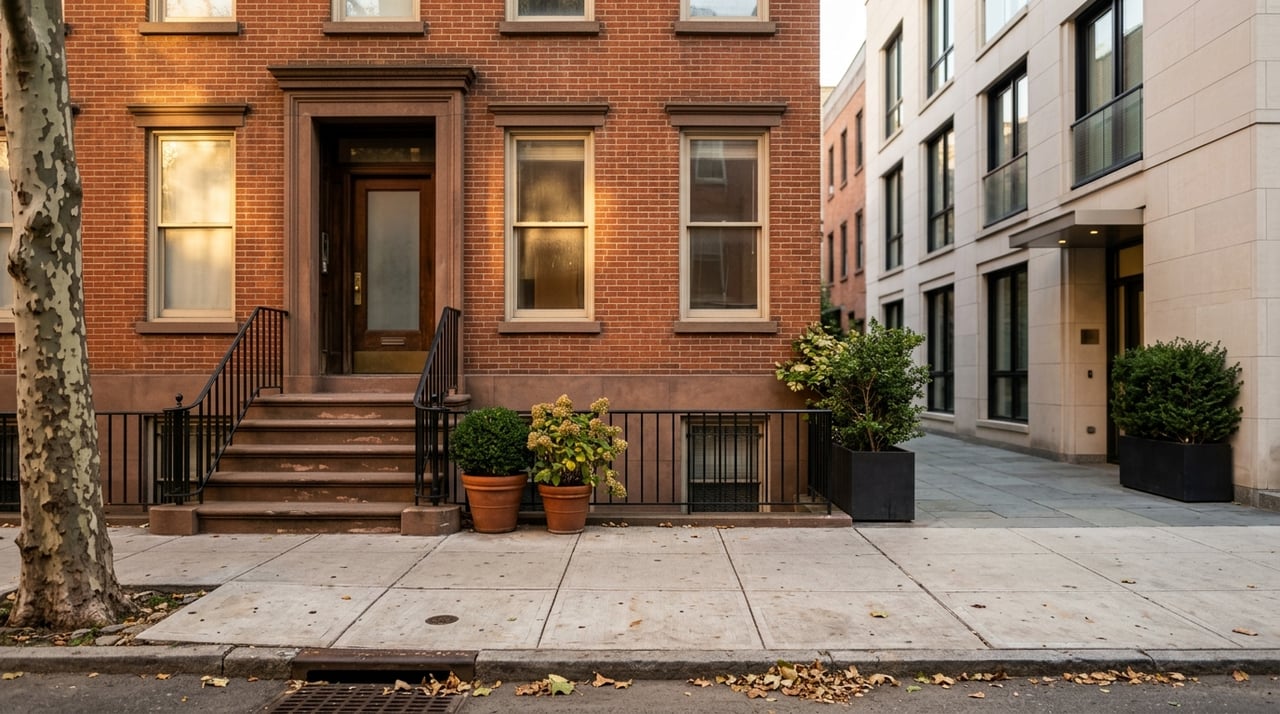
For brownstones and landmarked rowhouses, exterior condition deserves early attention. On the Upper West Side, buyers often form their first impression before they reach the front door.
If your property is in a historic district, New York City Landmarks Preservation Commission rules matter. LPC states that most exterior changes in historic districts require review, and LPC permits are required even when the Department of Buildings would otherwise allow self-certification. Ordinary maintenance such as replacing broken glass, recaulking, and repainting the same color generally does not require approval.
That means you should review exterior items well in advance, especially if you are considering work involving:
- Facade or masonry repairs
- Window replacements or changes
- Stoop repairs
- Exterior doors
- Cornices, railings, or visible trim
Approvals can affect timing. If you wait too long, necessary exterior work may conflict with your ideal launch window.
Build your documentation file early
A premium listing benefits from a clean paper trail. Buyers in this segment often want confidence not only in what they see, but in how the home has been maintained and improved over time.
Your documentation file should include the records that match your property type and past work. Based on New York City and New York State guidance, that may include:
- Certificate of Occupancy or Letter of No Objection
- Department of Buildings record showing no open violations or applications, where applicable
- LPC permits and sign-offs for relevant exterior work
- Renovation permits and final sign-offs
- Warranties and invoices for visible upgrades
- Before-and-after photos for major improvements
If you completed a renovation, keep the file organized and easy to review. Buyers and their representatives often see strong records as evidence of a well-managed home.
Choose the right launch window
Timing can support a better result, but only if the home is truly ready. StreetEasy seasonality data suggest the strongest launch windows are spring and, secondarily, early fall. Over the last three years, buyers found the most listings in May, inventory tends to decline after Memorial Day, open houses are busiest in June, and inventory rebounds modestly in September and October.
For an Upper West Side seller, that means the best time to prepare is usually earlier than you think. If you want a spring launch, decisions about repairs, staging, records, and any LPC or DOB issues should happen well beforehand.
A practical timeline might look like this:
| Timeline | Priority |
|---|---|
| 6-18 months out | Review condition, plan repairs, gather records |
| 4-6 months out | Complete cosmetic updates and address compliance items |
| 2-3 months out | Stage, declutter, finalize documentation |
| 2-4 weeks out | Photography, marketing prep, launch planning |
This kind of runway gives you more control. It also lowers the chance that a rushed decision undermines pricing or presentation.
What premium buyers expect now
Upper West Side buyers are generally comfortable with older housing stock. StreetEasy reported that 56% of Manhattan’s new inventory in 2025 came from prewar buildings, which helps explain why buyers accept age but still expect upkeep and a finished presentation.
In other words, buyers do not need your home to feel brand new. They do expect it to feel cared for, functional, and ready to show. For premium listings, that usually means strong visual editing, visible maintenance, and a launch package that feels complete.
The homes that tend to stand out are the ones that answer buyer questions before they become concerns. That includes condition, records, timing, and how clearly the home presents both online and in person.
A smart premium-sale checklist
If you want a simple way to focus your effort, start here:
- Repair visible wear before tackling ambitious upgrades
- Make layout and room function easy to understand
- Invest in cleaning, paint, lighting, and decluttering
- Review building or townhouse records early
- Resolve DOB or LPC issues before marketing begins
- Plan your listing around spring or early fall when possible
- Prepare the home for photography as carefully as for showings
On the Upper West Side, premium outcomes usually come from discipline, not excess. The best strategy is often a well-timed, data-informed plan that improves what buyers can see and supports what they need to verify.
When you are preparing for a premium sale, execution matters as much as intent. For a discreet, data-driven strategy tailored to your home, request a private consultation with The W Team.
FAQs
What should Upper West Side sellers fix first before listing?
- Start with visible, high-impact items such as deep cleaning, paint refreshes, flooring touch-ups, fixture updates, decluttering, and minor repairs to doors, cabinets, plumbing, and lighting.
Which cosmetic upgrades matter most for an Upper West Side premium sale?
- The most effective upgrades are usually the ones buyers notice right away, including clean flooring, fresh paint, updated fixtures and outlets, minor tile or backsplash improvements, and a calm, staged presentation.
What documents should an Upper West Side co-op or condo seller prepare?
- Gather the offering plan, amendments, financial statements, reserve or working-capital disclosures if applicable, by-laws or proprietary lease, house rules, annual report, board minutes, and recent financial records.
How do landmark rules affect Upper West Side brownstone repairs?
- If your brownstone is in a historic district, most exterior changes require LPC review, while ordinary maintenance such as recaulking, replacing broken glass, and repainting the same color generally does not.
When is the best time to list an Upper West Side home for sale?
- Spring is typically the strongest launch window, with early fall as a secondary option, so it is wise to complete repairs, records, and approvals well before those periods.