Choosing between a sleek new-development condo and a classic TriBeCa loft can feel harder than choosing the neighborhood itself. Both options can be exceptional, but they live very differently day to day. If you are weighing service, character, carrying costs, and renovation flexibility in TriBeCa, this guide will help you compare the trade-offs with clarity. Let’s dive in.
Why this choice matters in TriBeCa
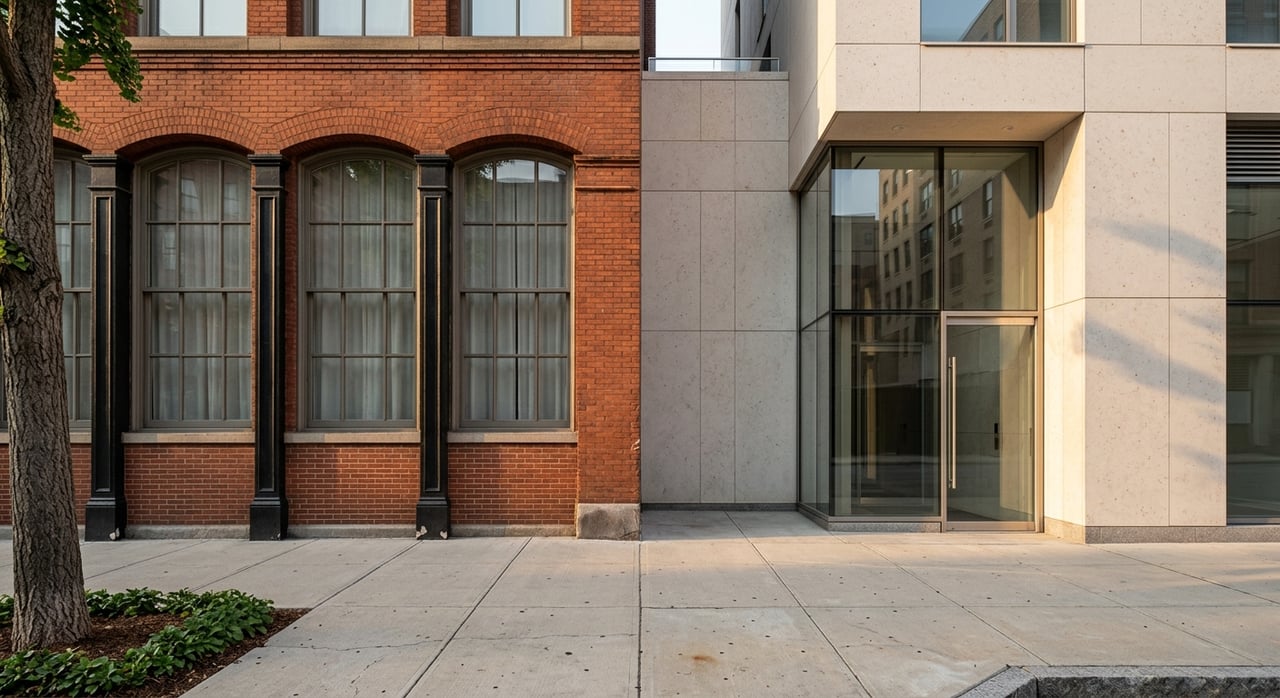
TriBeCa is not a neighborhood where “old versus new” is just a style preference. Much of its residential identity comes from preserved commercial architecture, especially store-and-loft and warehouse buildings developed from the mid-1800s into the early 1900s. That history shapes what homes look like, how buildings operate, and what owners can change.
In landmarked parts of TriBeCa, exterior work and sometimes interior work may require review and permits from the New York City Landmarks Preservation Commission. If you are buying with plans to reconfigure layouts, replace windows, or make visible building changes, that matters. In practical terms, your purchase decision is also a decision about rules, process, and flexibility.
The market backdrop raises the stakes. Miller Samuel’s 2025 decade survey shows SoHo/TriBeCa condos averaging $5.06 million and $2,375 per square foot, while SoHo/TriBeCa co-ops averaged $3.06 million and $1,712 per square foot. Corcoran’s 2Q 2026 Manhattan report also noted that new-development launches fell 37% year over year to 160 units, which points to a tight pipeline.
What new developments usually offer
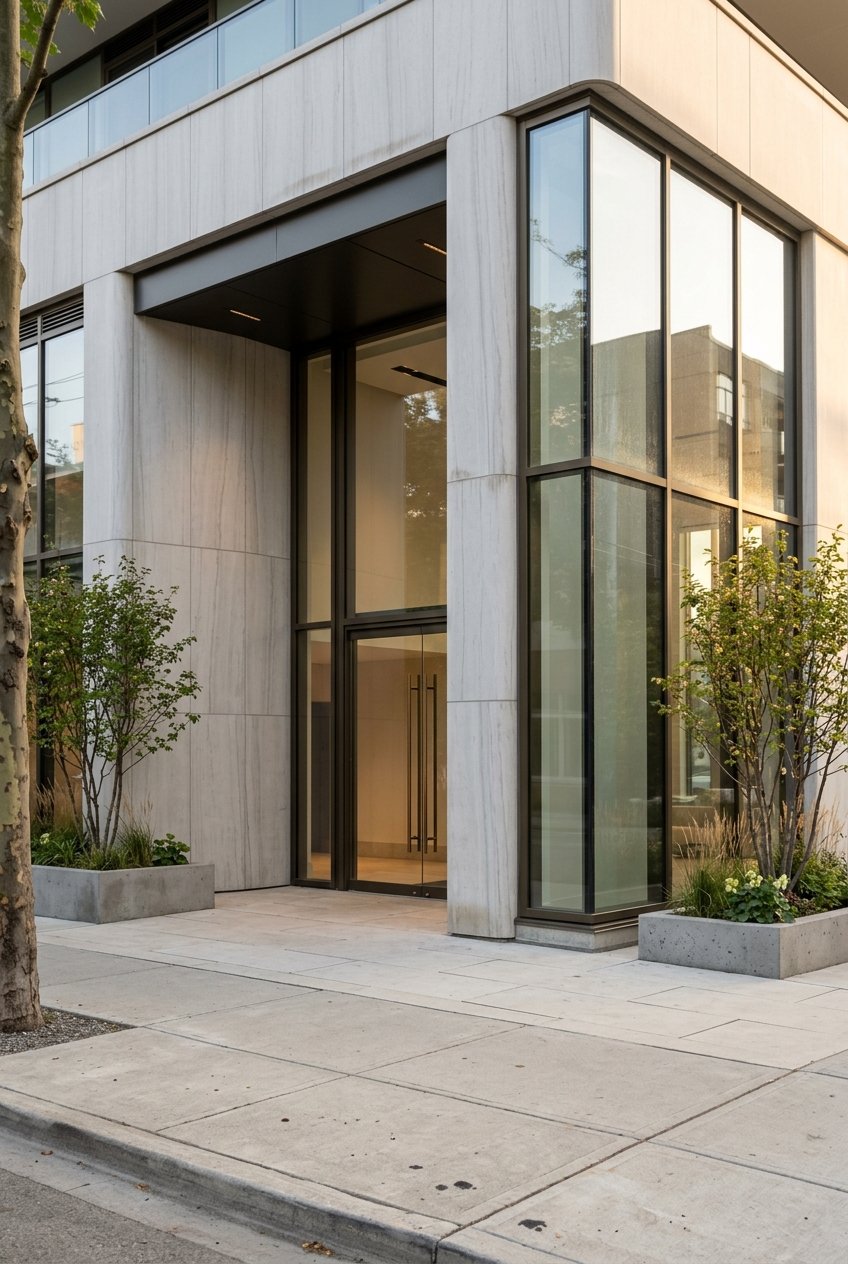
In TriBeCa, new-development condos often appeal to buyers who want a more controlled, turnkey ownership experience. These buildings typically emphasize staffing, amenities, polished common areas, and smoother day-to-day logistics. If convenience is high on your list, this category often stands out.
Some of the neighborhood’s best-known examples show how strong that service model can be. At 70 Vestry, amenities include a gated porte-cochère, private courtyard, 82-foot pool, squash court, café, library, children’s playroom, and pet care, with more than 12,000 square feet of amenities. At 56 Leonard, the building includes 17,000 square feet of amenities, and 111 Murray offers more than 20,000 square feet of private indoor and outdoor space, including two pools and a 3,000-square-foot fitness center.
Newer residences also tend to lean into light and vertical volume. A current listing at 111 Murray notes 10'7" ceilings and floor-to-ceiling glass, while 56 Leonard highlights large window walls and modern materials such as exposed concrete and natural woods. If you are drawn to crisp finishes and a brighter, more contemporary feel, this can be a meaningful advantage.
New-development strengths to consider
- More predictable building services
- Strong amenity packages
- Easier package handling and guest logistics
- A more turnkey living experience
- Modern layouts, finishes, and building systems
- Often better suited for lock-and-leave use
What historic lofts usually offer
Historic TriBeCa lofts deliver something new buildings often cannot replicate. They are rooted in the neighborhood’s 19th-century industrial and mercantile past, and many preserve original beams, exposed brick, oversized windows, and high ceilings. For many buyers, that architectural texture is the reason to be in TriBeCa in the first place.
Current listings show the range within this category. A listing at 39 Vestry Street describes original beams, exposed brick, and 9'10" ceilings in an 1890s building converted to condominium use in 1998. A listing at 115 West Broadway describes a 5,000-square-foot full-floor loft with 11.5-foot ceilings in an eight-unit building.
Historic does not always mean limited service. Some boutique loft buildings offer only lighter support, such as a part-time super, elevator, and package room. Others, like 443 Greenwich, pair landmarked character with a much more robust service model that includes 24-hour on-site staff, a live-in resident manager, private elevator entries, and a 70-foot pool with hammam.
Historic loft strengths to consider
- Distinct architectural character
- Larger open rooms and flexible living areas
- Smaller-building feel in many cases
- Original materials and texture that feel specific to TriBeCa
- Scarcity that can be appealing over the long term
Compare daily life, not just finishes
The smartest way to choose between these property types is to focus on how you will actually live. A glossy lobby or exposed brick wall may catch your eye first, but your routine will be shaped by service, scale, and building operations. In TriBeCa, those differences can be significant.
If you value staffed arrival, consistent package handling, wellness space, and easy guest management, a new-development condo often fits better. If you care more about volume, character, and a quieter, more intimate building environment, a historic loft may feel more natural. Neither is inherently better. The right choice depends on which trade-offs you want to own.
Carrying costs can vary widely
One common mistake is assuming that older automatically means less expensive or newer always means better value. In TriBeCa, carrying costs vary sharply across both categories. You need to review each property line by line.
For example, a current listing at 70 Vestry Street #5F shows $5,690 in monthly common charges plus $4,564 in monthly tax, for about $10,254 per month before financing. A current listing at 111 Murray Street #10A shows $1,745 in common charges plus $1,408 in monthly tax, or about $3,153 per month before financing.
Historic lofts can sit at either end of the spectrum. At 39 Vestry, the listing shows $686 in monthly common charges and $666 in annual tax, which works out to about $742 per month before financing. At 115 West Broadway #4, the listing shows $5,510 in monthly maintenance or common charges.
Review these cost items carefully
- Monthly common charges or maintenance
- Monthly property taxes
- Amenity-related cost burden
- Staffing and service levels
- Any building-specific factors that may affect operations
Renovation flexibility is part of the decision
In TriBeCa, renovation plans should never be treated as an afterthought. Many loft buildings are landmarked or located within historic districts, and work affecting exteriors, windows, and some other elements may require Landmarks Preservation Commission review. That process can influence timing, cost, and what is ultimately approved.
This does not mean you should avoid historic property. It means you should match the building type to your renovation goals. If you want a home that is close to move-in ready with fewer unknowns, new development may offer a cleaner path. If you are comfortable navigating more constraints in exchange for character and scale, a loft may still be the better fit.
Which option fits your buyer profile?
For a primary residence
A new-development condo often works best if you want daily ease. Staffed arrival, package handling, guest support, and broad amenity access can make a meaningful difference if this is your full-time home. Buildings like 70 Vestry and 111 Murray are strong examples of that lifestyle model.
A historic loft can also be an excellent primary residence, especially if you care more about space and personality than a full amenity stack. Buyers who prefer a more intimate building and a home with texture often lean this way. The key is being honest about whether you want service density or architectural character to lead.
For a pied-à-terre
For part-time use, simplicity often becomes more valuable. New development usually makes a strong case here because staffing, consistency, and lock-and-leave convenience can reduce friction. If you travel often or want the easiest ownership rhythm, this category deserves close attention.
A historic loft can still work beautifully as a pied-à-terre if you want a home that feels more distinctive and less standardized. But you should be comfortable with a building experience that may be less uniform from one property to the next.
For a long-term hold
For long-term ownership, rarity and execution matter more than category alone. The strongest choice is often the best-located, best-managed, and most compelling version of either product type. In a neighborhood like TriBeCa, quality within the category can matter more than the category itself.
The market context supports that logic. SoHo/TriBeCa condos trade at a premium to co-ops, and the new-development pipeline remains thin. A highly polished loft conversion may benefit from scarcity, while a service-rich new condo may appeal to a broader future luxury buyer pool.
A simple way to choose in TriBeCa
If you are stuck between the two, try narrowing the decision to three questions. First, how important is turnkey convenience to your daily life? Second, how much do you value original architectural character? Third, how comfortable are you with building rules, service variability, and possible renovation constraints?
If your answers point toward ease, service, and predictability, new development usually leads. If they point toward texture, scale, and a more distinctive building identity, historic lofts usually lead. In either case, unit-by-unit analysis remains essential because service levels and carrying costs can differ dramatically.
In TriBeCa, the best purchase is rarely about choosing old or new in the abstract. It is about choosing the version of ownership that fits your routine, priorities, and long-term plan. If you want a private, data-driven comparison of specific TriBeCa opportunities, The W Team can help you evaluate the trade-offs with clarity and discretion.
FAQs
What is the main difference between TriBeCa new developments and historic lofts?
- New developments usually offer more amenities, staffing, and turnkey convenience, while historic lofts usually offer more architectural character, open volume, and a smaller-building feel.
Are TriBeCa historic lofts always less expensive to carry than new condos?
- No. Carrying costs vary widely in both categories, so you should compare monthly charges, taxes, and service levels for each specific property.
Do TriBeCa historic properties have renovation restrictions?
- Many do. In landmarked buildings or historic districts, some work may require review and permits from the New York City Landmarks Preservation Commission.
Is a new-development condo better for a TriBeCa pied-à-terre?
- It often can be, especially if you want a more predictable lock-and-leave ownership experience with staffing and easier day-to-day logistics.
Can a historic TriBeCa loft still offer strong building services?
- Yes. Some historic conversions offer robust services and amenities, although service levels can vary much more from building to building.
What should you compare before buying in TriBeCa?
- Focus on carrying costs, service levels, building rules, renovation flexibility, layout, and how the property fits your daily routine and long-term goals.